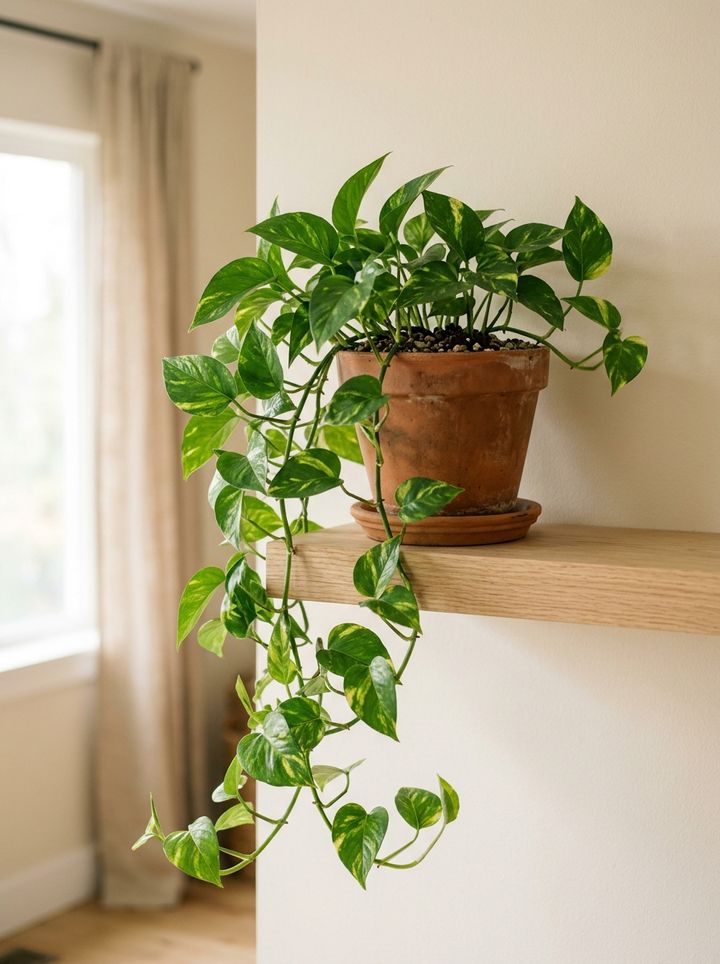
Welcome — this plant comes from the Dr. Plantas nursery. Here’s everything you need to care for it.
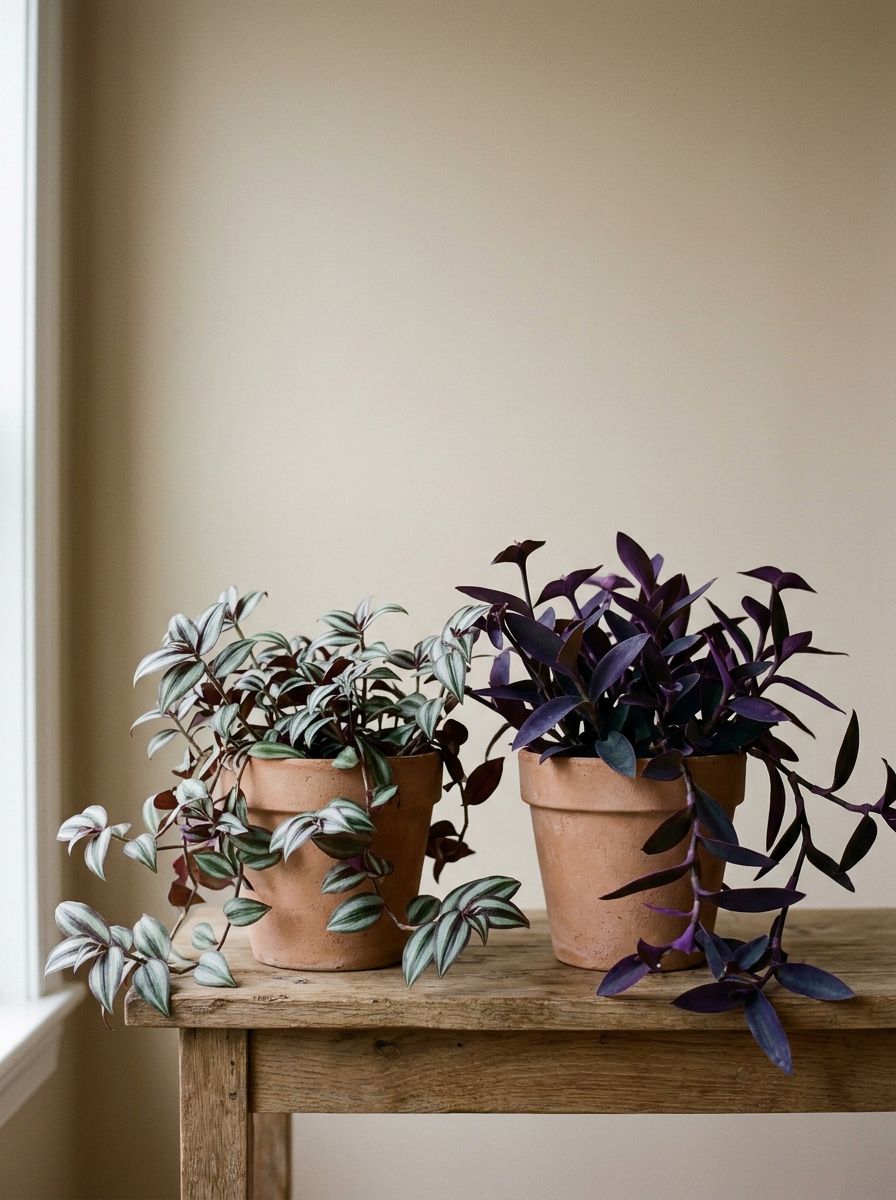
Fig. 01Tradescantia
Plant care guide
Tradescantia
Tradescantia fluminensis, T. pallida, T. zebrina·Family Commelinaceae
Also known as Inch plant, purple heart, spiderwort
Super-fast trailing plants with striped, purple or tricolor leaves. They grow from a single cutting and fill a hanging basket in a few weeks.
LightBright indirect or gentle sun
WaterWhen the top inch is dry
HumidityNormal indoor
Temperature65–86 °F (18–30 °C)
PetsSap irritates the skin and mouth of dogs and cats
DifficultyVery easy
Varieties we grow
Tricolor
Leaves striped green, white and pink, with purple undersides and stems; trailing and a bit sensitive to strong sun.
Purple Passion
Deep purple all over, with long thick leaves on fleshy stems; upright at first, then cascades.
Purple Bridal Veil
Not actually a tradescantia but Gibasis pellucida, from the same family: tiny leaves with purple undersides and small white flowers; fine-textured and trailing.
Zebrina
Leaves with two silver bands over purplish green and purple undersides; trailing and one of the easiest.
Light
It needs plenty of brightness to keep its colors; in low light the stems stretch, the leaves spread out and the purple or stripes fade. Indoors, put it by your brightest window. Purple Passion handles direct sun; Tricolor is more delicate and prefers filtered light.
Watering
It likes evenly moist soil, neither soggy nor bone dry. Water when the top inch is dry. Big swings, from very dry to very wet, leave brown spots on the leaves. Zebrina is the most forgiving of missed waterings.
Soil and pot
An all-purpose mix with perlite so it breathes, in a pot with drainage holes. Pinch the tips now and then so it branches and stays bushy. The pieces you trim root in a glass of water within days.
Humidity and temperature
Normal indoor humidity is enough. It grows strongest between 77 and 86 °F (25–30 °C) and suffers below 50 °F (10 °C), which is rare here except in the mountains in winter or right in front of the air conditioner.
In the Dominican Republic
It practically grows on its own outdoors, on porches and in gardens with partial shade, and Purple Passion is widely used as a groundcover in full sun. Planted in the ground it spreads fast, so keep it in a pot or basket. Its fleshy stems snap in strong wind, so shelter it during hurricane season, and in long rainy spells make sure the pot doesn't stay waterlogged.
Also known as
Tradescantia
Common Spanish name
Cucaracha
Caribbean (not yet confirmed in the Dominican Republic)
Matalí
Mexico (Tabasco and Chiapas; T. zebrina)
Amor de hombre
Spain (T. fluminensis)
Purpurina
Common Spanish name (T. pallida)
Inch plant
Common English name
Purple heart
Common English name (T. pallida)
Wandering dude
Common English name (T. zebrina)
Common problems
Long, bare stems with widely spaced leaves→Not enough light; move it closer to the window and trim the tips so it regrows.
Leaves losing their purple or stripes→Low light; move it somewhere brighter.
Brown spots or tips→Uneven watering; keep the soil evenly moist, never bone dry or soggy.
Soft, black stems at the base→Too much water; cut the healthy tips and root them again.
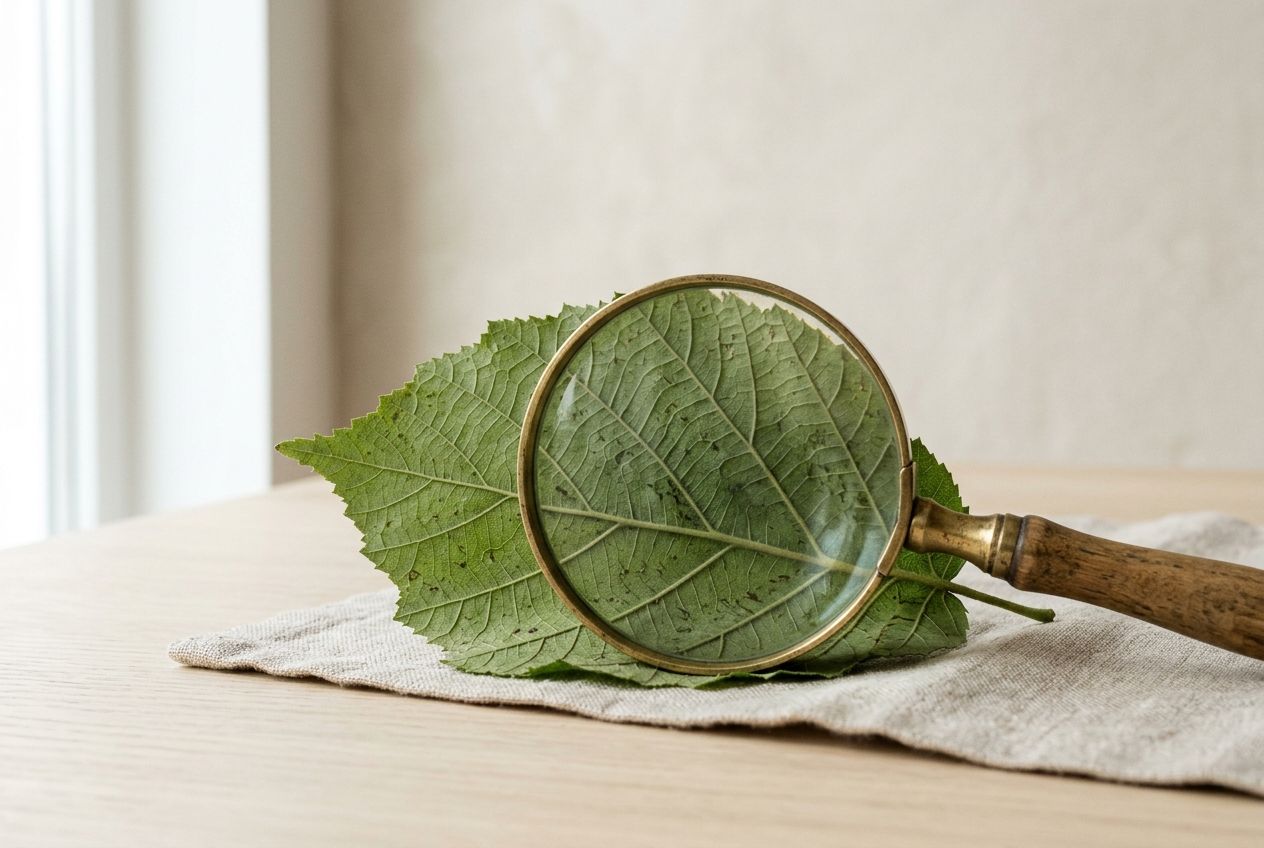
Fig. 02Check the undersides of the leaves every week.