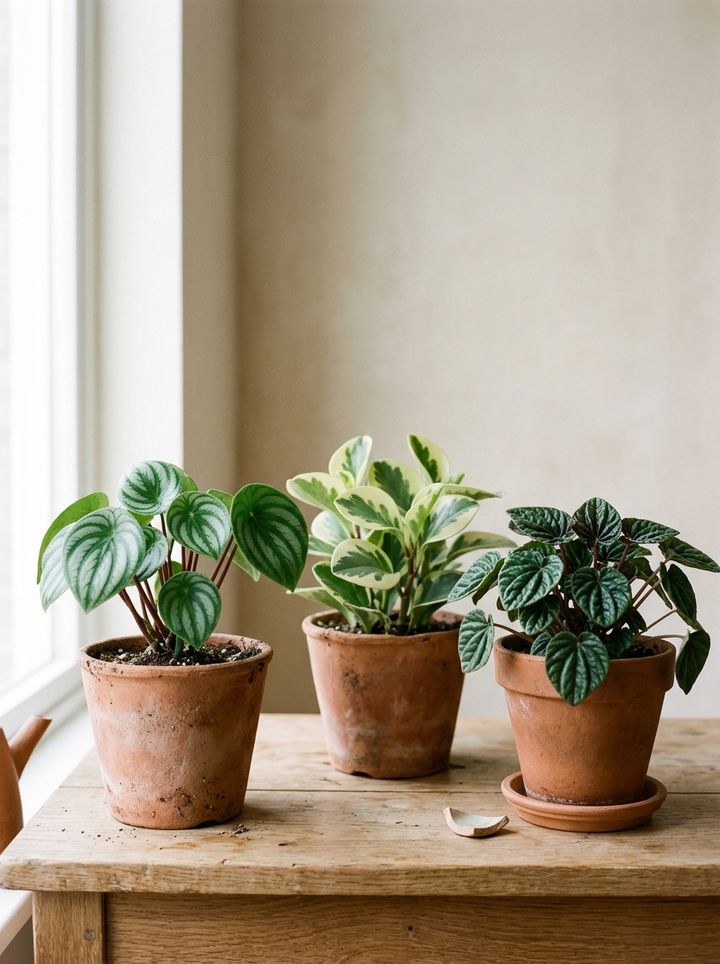
Welcome — this plant comes from the Dr. Plantas nursery. Here’s everything you need to care for it.
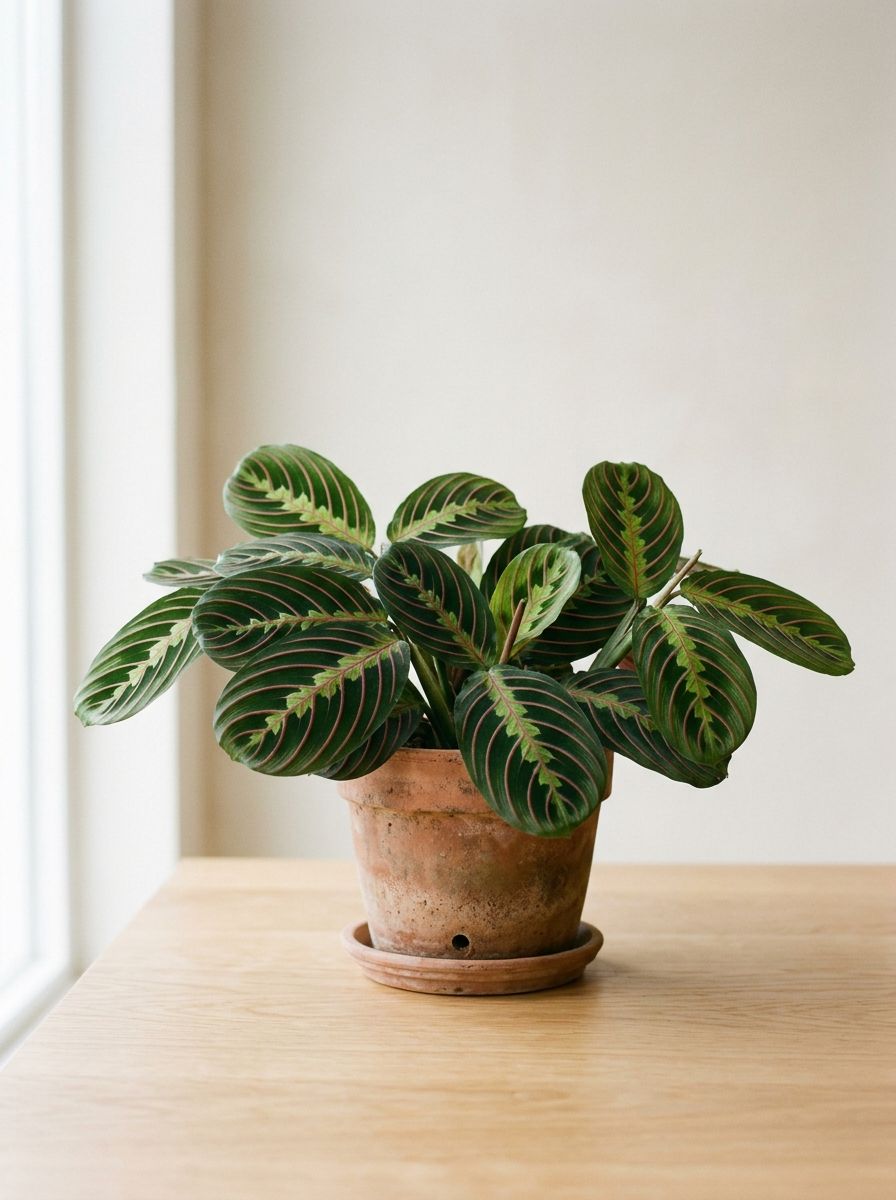
Fig. 01Maranta
Plant care guide
Maranta
Maranta leuconeura·Family Marantaceae
Also known as Prayer plant
Its leaves look hand-painted, and at night they rise and fold together like hands in prayer. It asks for humidity and steady watering, and it's safe for pets.
LightMedium to bright indirect
WaterBarely moist soil, never soggy
HumidityHigh (60% or more)
Temperature65–86 °F (18–30 °C)
PetsNon-toxic to dogs and cats
DifficultyModerate
Varieties we grow
Maranta Red
Dark green leaves with bold red veins and a pale green, herringbone-shaped center.
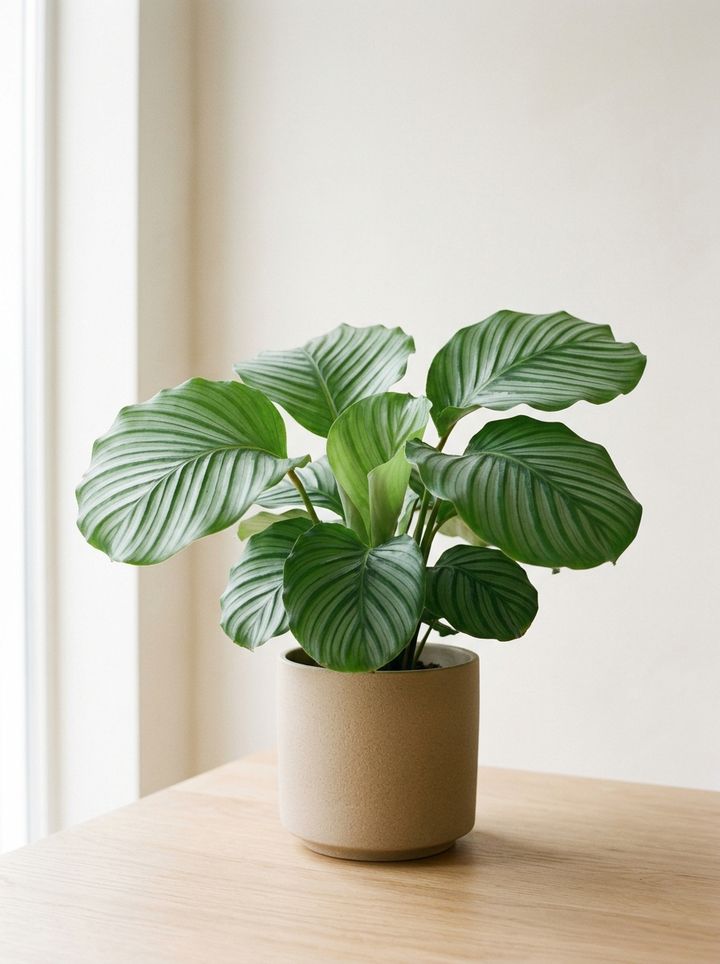
Maranta Green
Leaves in shades of green with a pattern of darker blotches and veins, without the red of 'Red'.
Maranta Cat Mustache
Green leaves splashed with white across the whole surface; the lightest of the group.
Light
Give it medium to bright indirect light, such as near a window with a sheer curtain. Direct sun scorches the leaves and fades their pattern; in very low light it grows even more slowly and new leaves come in small.
Watering
Keep the soil barely moist — water when the top half inch is dry. If it dries out completely the tips burn; if it stays soggy the roots rot. It's sensitive to chlorine and salts, so use rainwater or tap water that has sat out overnight. Water in the morning, at the base, without wetting the leaves.
Soil and pot
It likes a loose mix that holds some moisture, such as all-purpose potting mix with coco coir and perlite, in a shallow pot with drainage holes, since its roots are short. The stems tend to spill over, so it looks lovely in a hanging basket.
Humidity and temperature
It loves high humidity, 60% and up, and warmth between 70 and 86 °F (21–30 °C). Below 59 °F (15 °C) it struggles. If the air gets dry, group it with other plants or set it on a tray of pebbles and water, without the pot touching the water.
In the Dominican Republic
It loves the humidity here; its real enemy is air conditioning, which dries out the leaf tips within days. On a porch or terrace, keep it in the shade and away from midday sun. If it lives outdoors during the rainy season, don't let water sit in the saucer, and bring it inside before a hurricane.
Also known as
Planta de la oración
Common Spanish name
Planta que reza
Common Spanish name
Maranta
Common Spanish name
Prayer plant
Common English name
Herringbone plant
Common English name (Maranta Red, var. erythroneura)
Rabbit tracks
Common English name (green with dark blotches, var. kerchoveana)
Common problems
Brown tips and edges→Dry air, soil that dried out, or water with chlorine or salts; raise the humidity and change your watering water.
Curled leaves→It's thirsty or the air is too dry; check the soil and move it away from the AC.
Dark spots on the leaves→The leaves stayed wet overnight; water in the morning without wetting the foliage.
Pale or scorched patches→It's getting direct sun; move it to indirect light.
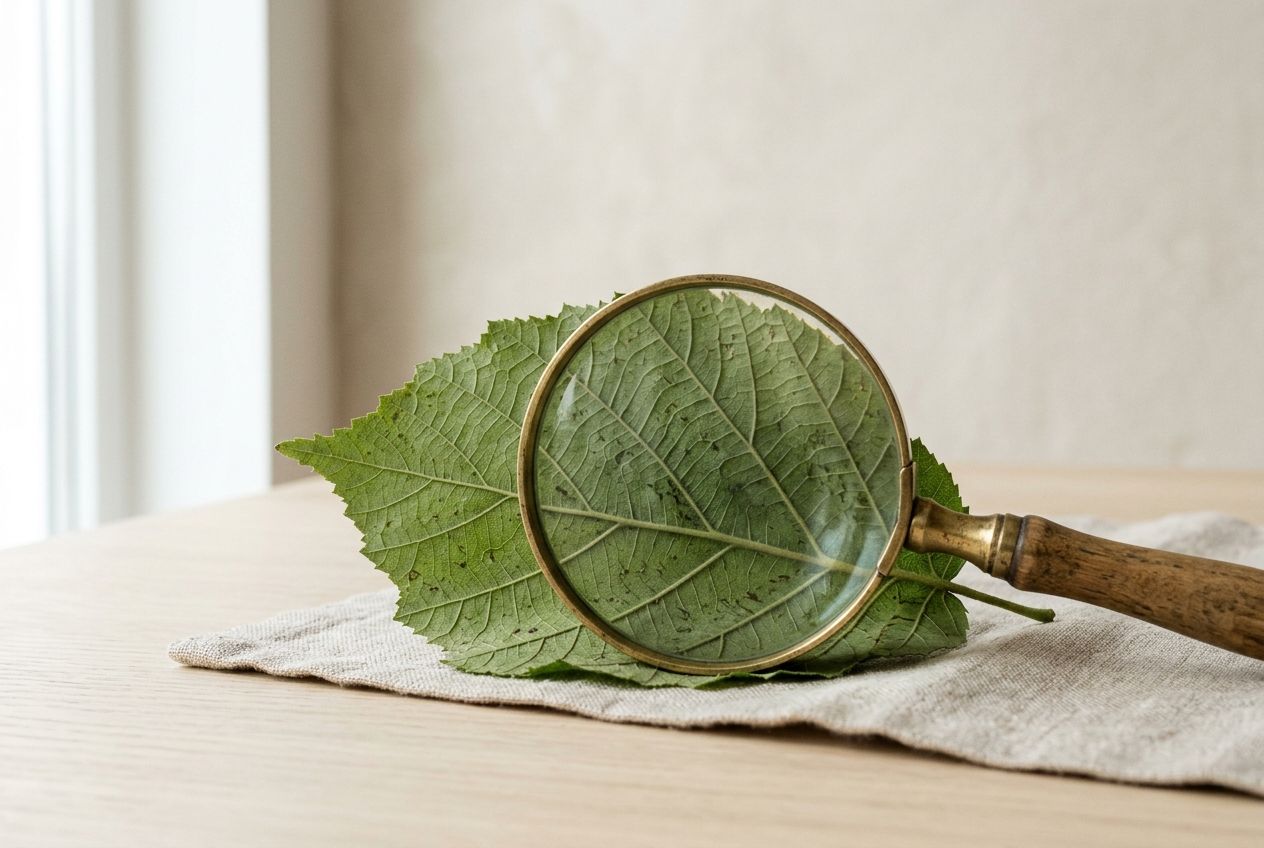
Fine webbing and specks under the leaves→Spider mites; wipe the leaves, raise the humidity and use insecticidal soap.
Fig. 02Check the undersides of the leaves every week.